Ischaemic Strokes of Different Etiologies
Stroke due to other determined cause
Strokes due to other determined cause would include those due to carotid or vertebral artery dissection, vasculitis and thrombophilias.
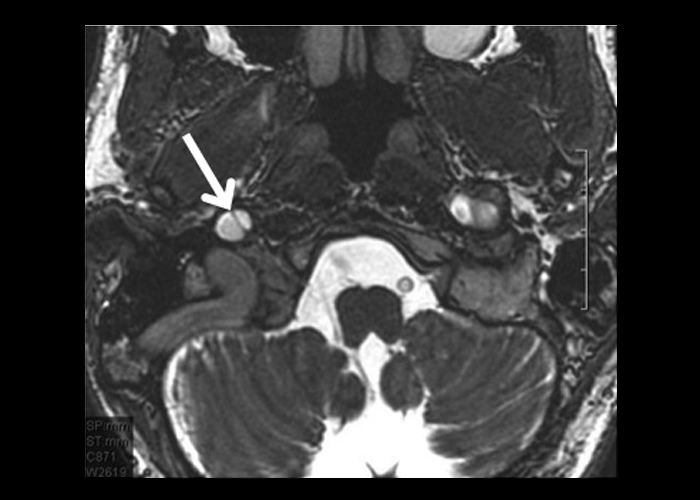
The first case shows the MRI (Figure 1) from a patient with a right carotid artery dissection resulting in an anterior circulation infarct. The MRI shows a clear dissection flap along the right carotid artery  . If the dissection flap is large and occludes the entire artery lumen, this may result in impaired blood flow causing cerebral ischaemia. The dissection flap will also result in turbulent, non-laminar blood flow along the blood vessel, thus resulting in blood clot formation and embolic stroke. Carotid and neck dissections are commonly caused by neck trauma or manipulation.
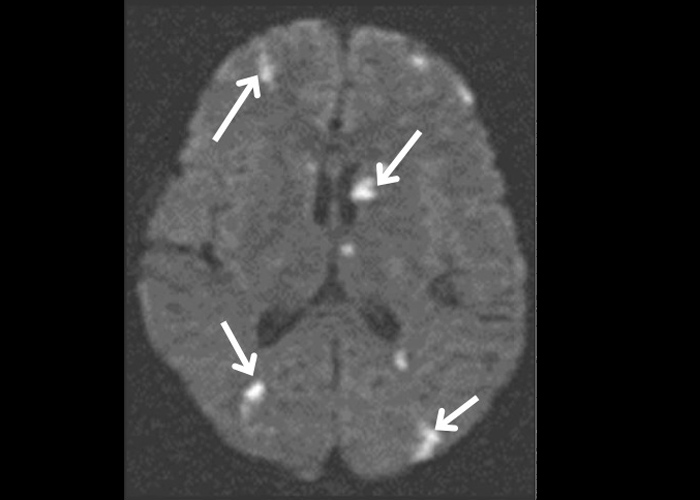
The next MRI (Figure 2) is from a patient with cerebral vasculitis due to underlying systemic lupus erythematosis. There are multiple areas of restricted diffusion in the diffusion weighted imaging sequence signifying multiple infarcts as a result of the vasculitic process.