
| |

Ischaemic Changes of Different Anatomical Regions or Vascular Territories

Cerebral infarction involving the middle cerebral artery territory: Chronic middle cerebral artery territory infarct

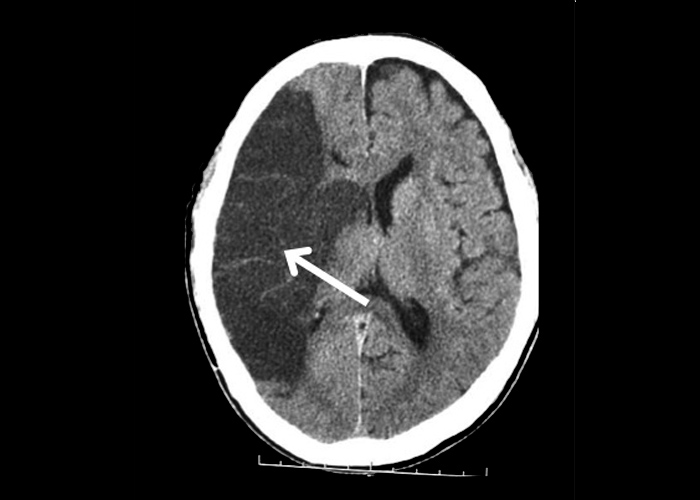
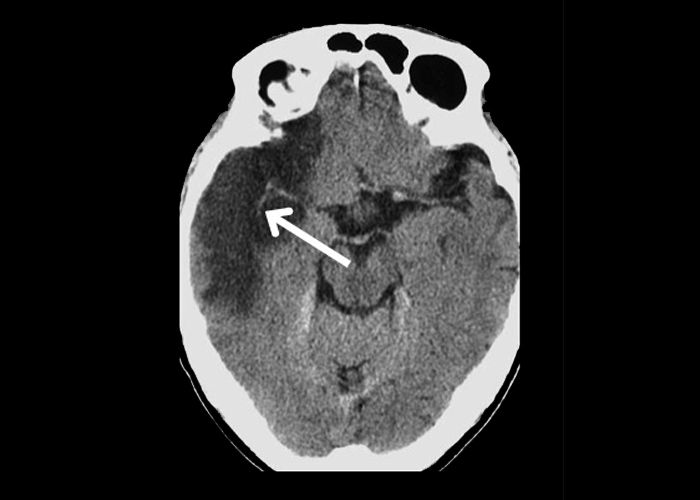
Compared to the previous CT scan, the films shown here is from a patient with a chronic right middle cerebral artery territory infarct arrow_1 (Figures 1 and 2). There is a sharply delineated wedge-shaped hypodense area (approaching the density of cerebral-spinal fluid) involving the grey and white matter supplied by the right middle cerebral artery.
Similar Posts

  • Hemi-craniectomy

    This is a non-contrast cranial CT from a middle-aged man with multiple cardiovascular risk factors who suffered a severe ischaemic stroke involving the left middle cerebral artery territory. There was significant cytotoxic cerebral oedema as a result of the extensive infarction. The patient was operated on by the Neurosurgeons and a left hemi-craniectomy was performed…

  • Osmotic Demyelination Syndrome

    This is a set of cranial MRIs from a patient with osmotic demyelination syndrome, formerly called central pontine myelinolysis. Osmotic demyelination syndrome occurs when wide fluxes in serum sodium levels are induced by too rapid correction of hyponatremia. Oligodendrocytes, which forms the myelin sheaths, are particularly vulnerable to osmotic changes. If the osmotic stress is…

  • Multiple Sclerosis

    The set of cranial MRIs shown here are from a young woman with a known history of relapsing-remitting multiple sclerosis. In the first scan (T2W axial cut), we can see multiple T2 hyperintense lesions involving bilateral cerebral cortices (Figure 1). These lesions are noted to be of a juxta-cortical and also peri-ventricular distribution, which are classical of multiple sclerosis. In the next…

  • |

    Intention Tremor

    Intention tremor can be elicited by the finger-nose test. In normal patients, the movements between the physician’s finger and patient’s nose should be smooth, but adjustment is allowed according to the patient’s upper limb power. This man has intention tremor and impaired finger-nose test on the right side, whilst the left side is normal. Discussion on intention…